
Logistics & Transport Assets · Supply Chain & Network Operations
Supply Chain Network & Warehouse Optimization
Design a supply chain network that serves customers faster at a lower total landed cost
Discuss this serviceWhat it is
Supply Chain Network & Warehouse Optimization
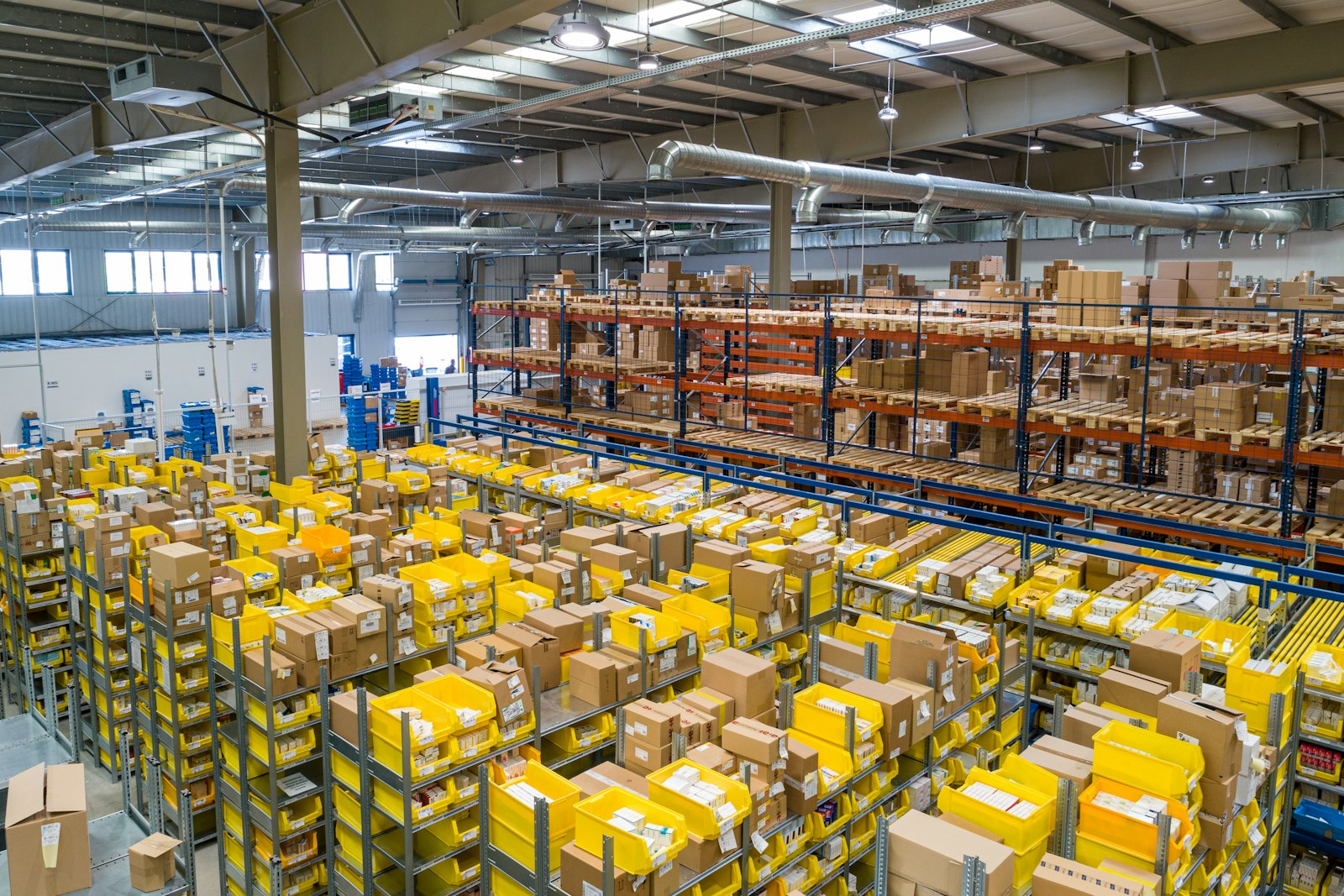
Supply Chain Network Design uses optimisation modelling to decide the right number, location, capacity, and role of plants, regional distribution centres, and local warehouses. We balance transport cost, facility cost, inventory holding, and customer lead-time requirements.
- Typical duration
- 6 to 10 weeks
- Industry
- Logistics & Transport Assets
The business problem
Why clients need this
Many networks grew piece by piece through acquisitions or ad hoc expansion, leaving redundant warehouses, high transport costs, and slow delivery.
- 01
Too many small warehouses push up fixed costs and spread inventory thinly.
- 02
Plants and distribution centres sit far from where demand has moved, adding transit days.
- 03
A disruption at one site or region can cut off supply to whole customer segments.
Our approach
How we deliver it
- 1
Demand & Flow Baseline
Mapping customer demand to pin-code level, SKU flows, transit times, and facility cost structures.
- 2
Network Optimisation Modelling
Building mixed-integer linear programming (MILP) models that test trade-offs between facility count, transport cost, and service levels.
- 3
Scenario & Sensitivity Testing
Testing designs against fuel price spikes, demand surges, and supplier or site disruptions.
- 4
Implementation Roadmap
Sequencing warehouse consolidation, lease exits, new hubs, and inventory rebalancing over a 6-to-18-month plan.
Data & AI
How technology strengthens this service
Optimisation solvers evaluate a very large number of network configurations to find the lowest-cost design that still meets your service-level constraints, and show what each constraint costs.
How we use AI across our workTypical deliverables
What you receive
- Supply Chain Network Optimisation Model
- Recommended Facility Footprint Map with capacities
- Total Landed Cost Comparison (Current vs. Future Network)
- Phased Warehouse Consolidation & Migration Plan
Outcomes
What changes for you
- A network design that lowers total logistics and warehousing cost while meeting defined service levels
- Shorter order-to-delivery lead times for priority customer segments
- Working capital released by holding safety stock in fewer, better-placed locations
Who it is for
- National consumer brands & distributors
- Heavy equipment & auto component manufacturers
- E-commerce & omni-channel fulfilment operators
- Pharmaceutical & medical device distributors
FAQs
Common questions
How does network design account for tax and service requirements?+
We can include relevant state and local tax assumptions, delivery commitments, facility costs, and operating constraints in the model. The right network depends on the client's footprint and customer requirements.
Will fewer warehouses mean slower delivery?+
Not necessarily. Placing fast-moving inventory in well-located regional hubs can shorten average delivery times while reducing total inventory. The model shows the trade-off explicitly for each scenario.
How often should we review our network?+
Every 2 to 3 years, or sooner after significant demand growth, an acquisition, or new transport infrastructure such as expressways or freight corridors.
Related
More from Logistics & Transport Assets
Logistics Cost & Freight Diagnostic
Freight cost analysis, lane benchmarking, and modal options to lower total distribution spend.
Explore the service
AI Demand Forecasting
Machine learning forecasts and inventory models that reduce stockouts and excess stock.
Explore the serviceWarehouse Automation Advisory
Independent feasibility, vendor selection, and design review for warehouse robotics and automated storage.
Explore the serviceArticle · Logistics & Transport Assets
Freight cost is a network problem. Start with the lanes.
A practical way for U.S. shippers to connect freight spend, warehouse choices, inventory, and service levels.
11 October 2026 · 5 min read
Discuss supply chain network & warehouse optimization with our team
Tell us about your site, plant or network. A senior consultant will reply within two business days.