
Energy, Utilities & Renewables · Electrical Engineering & Power Systems
Arc Flash Studies
Know the electrical hazards in your facility, and label and protect equipment accordingly
Discuss this serviceWhat it is
Arc Flash Studies
A power systems study models your electrical distribution system from the utility service down to the panelboards. We calculate available short-circuit current and incident energy, check that protective devices are rated and set correctly, and prepare equipment labels and a clear set of recommendations that facilities and safety teams can act on.
- Typical duration
- 3 to 8 weeks depending on the size and complexity of the system
- Industry
- Energy, Utilities & Renewables
The business problem
Why clients need this
Electrical systems change over time as loads are added, equipment is replaced, and utility conditions shift. Studies that were done years ago, or never done at all, leave workers exposed and equipment at risk.
- 01
Arc flash labels and one-line diagrams are missing, out of date, or no longer match the installed equipment.
- 02
Breakers and fuses may be undersized for the available fault current, or set so they do not clear faults quickly enough.
- 03
Electrical safety programs need current study data to support work procedures and personal protective equipment selection.
Our approach
How we deliver it
- 1
Data Collection & One-Line Diagram
Field verification of equipment nameplates, cable sizes, transformer data, and protective device settings, used to build or update the single-line diagram.
- 2
System Modelling
Building a model of the system in power analysis software using utility fault data and verified equipment information.
- 3
Short-Circuit, Coordination & Arc Flash Analysis
Calculating fault currents, checking equipment ratings, reviewing device coordination, and calculating incident energy using IEEE 1584 methods.
- 4
Labels, Report & Recommendations
Arc flash labels, a written study report, and a prioritised list of setting changes and equipment upgrades.
Data & AI
How technology strengthens this service
The verified model is kept as a living digital record, so a change such as a new transformer or a utility upgrade can be re-run quickly rather than requiring a new study from scratch.
How we use AI across our workTypical deliverables
What you receive
- Updated single-line diagram
- Short-circuit and protective device coordination study
- Arc flash incident energy analysis with equipment labels
- Recommendations for settings changes and equipment upgrades
- Study model files for future updates
Outcomes
What changes for you
- Current, documented hazard information to support the facility's electrical safety program
- Protective devices confirmed as properly rated and coordinated, or a clear list of what needs to change
- A reusable system model for future changes
Who it is for
- Manufacturing plants & warehouses
- Hospitals & commercial campuses
- Data centres & utilities
- Facility managers & safety leaders
FAQs
Common questions
How often should an arc flash study be updated?+
NFPA 70E calls for reviewing the study at intervals not exceeding five years, and sooner after major changes to the system. Your safety program and authority having jurisdiction may set stricter requirements.
Do we need to shut down the plant for the data collection?+
Usually not. Much of the data can be collected with equipment energized, following your site's safe work rules. Some access may need to be scheduled around outages.
Will you tell us how to reduce incident energy levels?+
Yes. Where results are high, we identify options such as setting changes, maintenance modes, or equipment upgrades, and explain the trade-offs.
Related
More from Energy, Utilities & Renewables
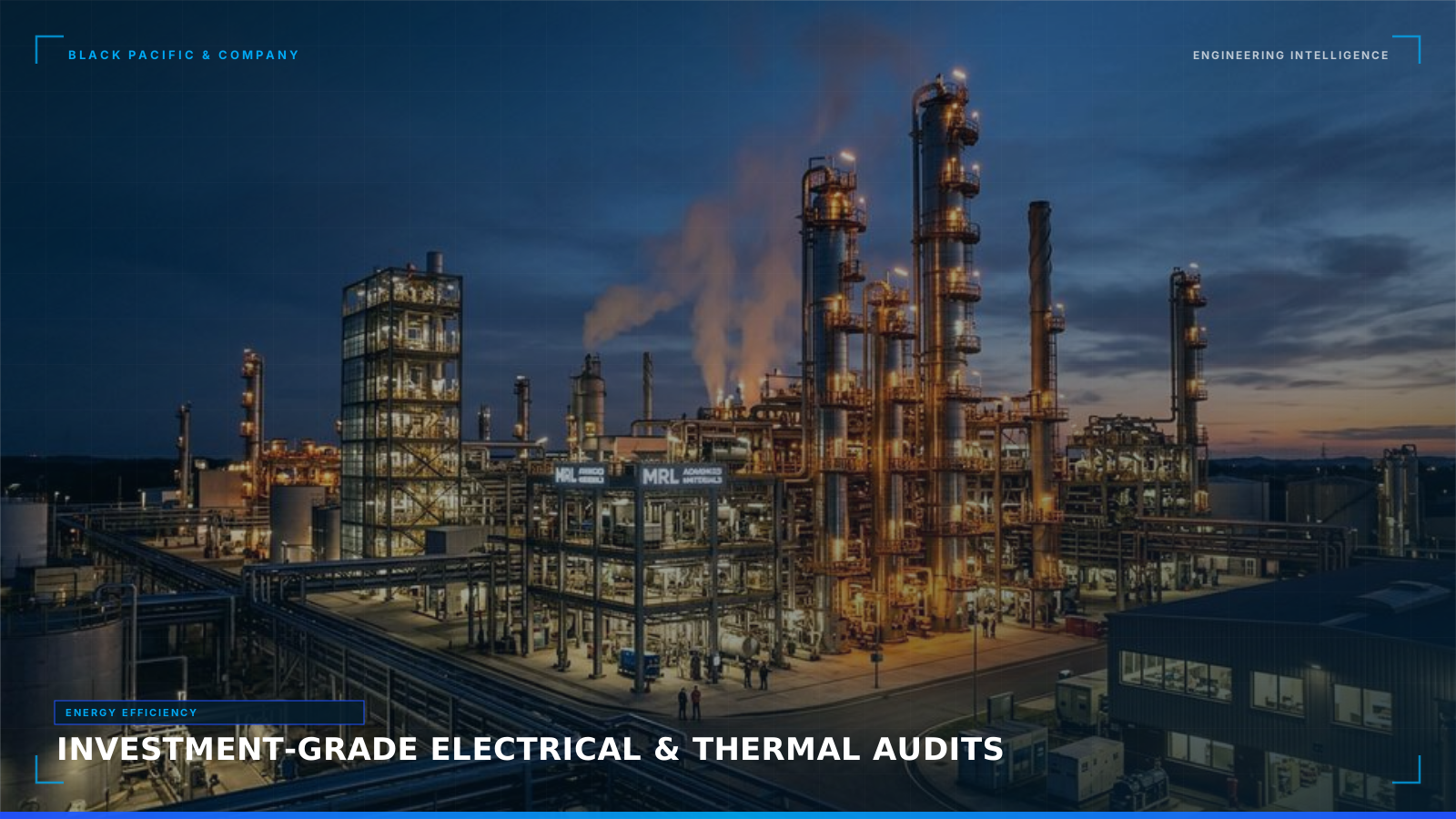
Industrial Energy Audit
Thermal and electrical energy audits that cut consumption, demand charges, and power factor penalties.
Explore the service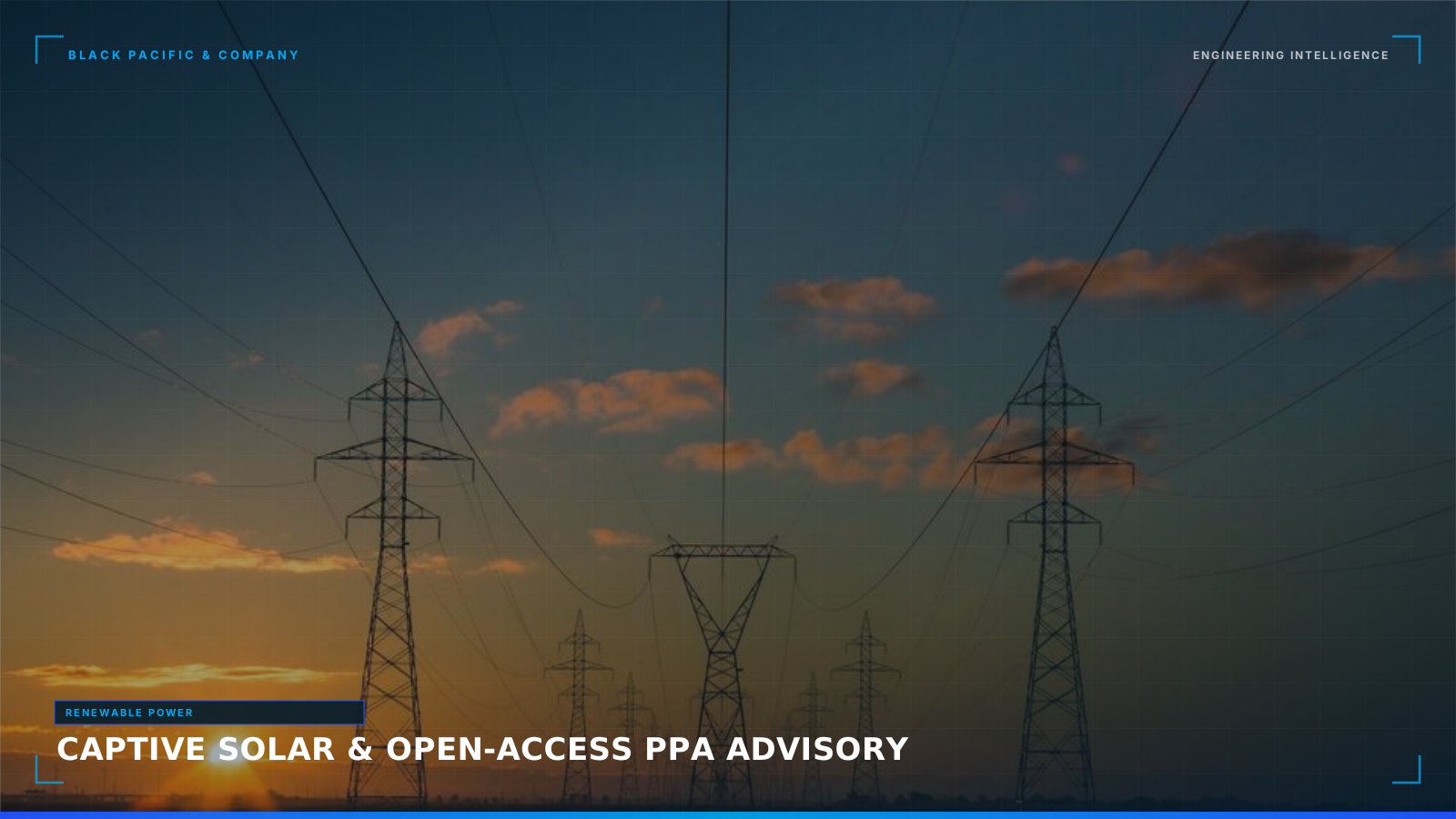
Renewable Energy Advisory
Feasibility, roof structural checks, EPC procurement, and PPA structuring for commercial and industrial solar.
Explore the service
Decarbonisation Strategy
Scope 1, 2 & 3 emissions accounting, product footprints, and practical decarbonization roadmaps.
Explore the service
Electrical Commissioning
Independent testing and verification of new or modified electrical systems before they go into service.
Explore the service
Utility Rate Optimisation
Analysis of rates, demand charges, and load profiles to lower electricity cost without disrupting operations.
Explore the serviceArticle · Energy, Utilities & Renewables
Industrial power strategy starts with the load profile
A measured view of demand, utility terms, power quality, and operating constraints is the starting point for energy decisions.
11 October 2026 · 4 min read
Discuss arc flash studies with our team
Tell us about your site, plant or network. A senior consultant will reply within two business days.